Heavy Plate Bending and Rolling
Wear plate and quenched-and-tempered grades do not bend like S355. Most of what goes wrong in forming is a radius that was right for the drawing and wrong for the grade.
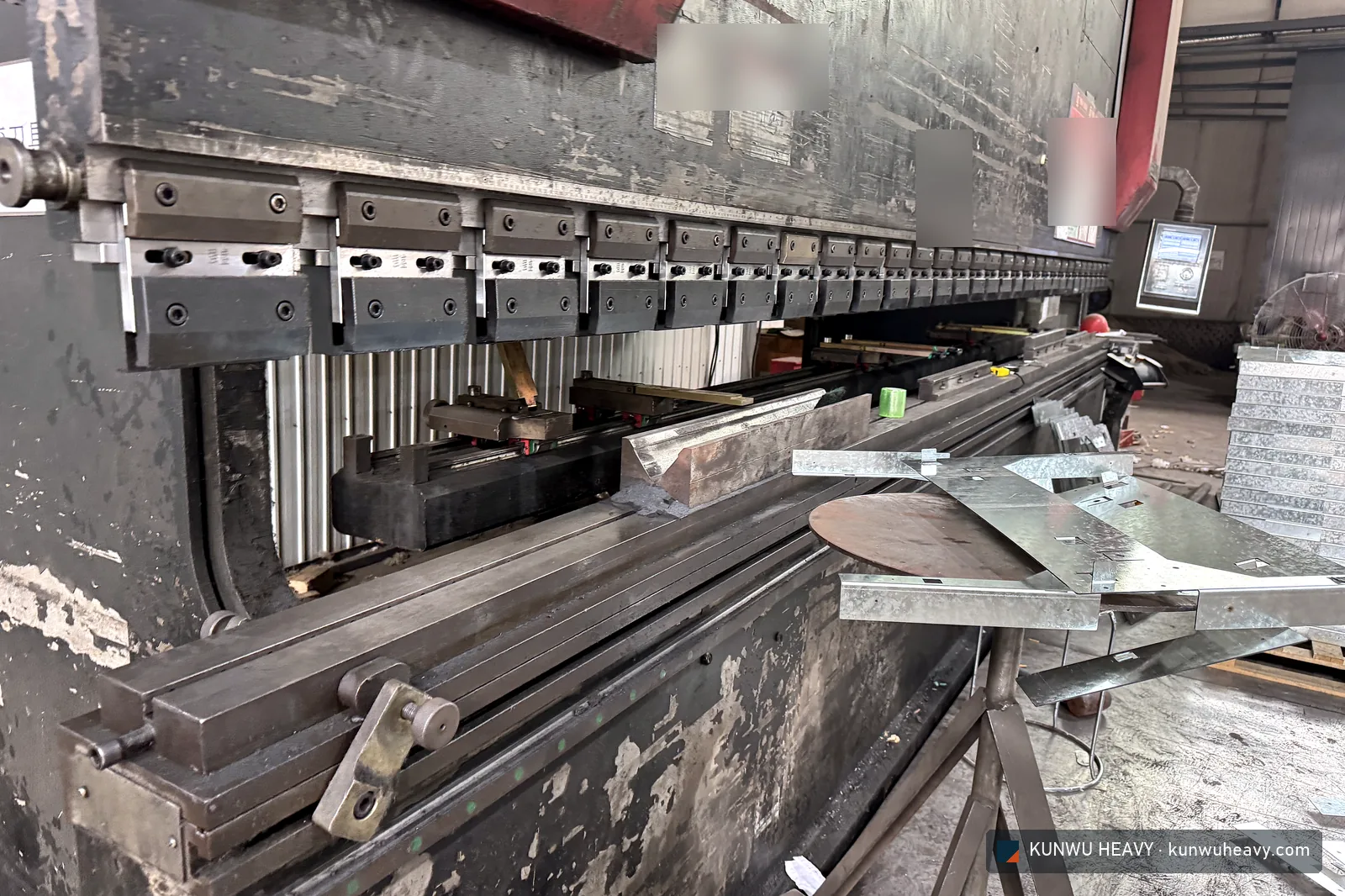
Capability
| Parameter | Value | Note |
|---|---|---|
| Press brake capacity | 400 t | — |
| Max bend length | 4000 mm | At 16 mm thickness |
| Angular tolerance | ISO 13920 Class B | — |
| Plate rolling | 30 × 2500 mm | Thickness × width |
| Min rolled diameter | 600 mm | Grade dependent |
| Forms | U, V, channel, box, cone, radius | — |
- Thermal cutting to ISO 9013 Range 2 as standard.
- Weldment dimensional tolerances to ISO 13920 Class B as standard, a tighter class on request.
- Weld quality to ISO 5817 Level C as standard, Level B where the drawing specifies it.
- Machined features to ISO 2768-m unless the drawing states otherwise.
- Surface preparation to ISO 8501-1 Sa 2½, coating systems to ISO 12944 up to C4.
A note on wear and high-strength grades
NM450 and S690QL need a larger inside radius than carbon steel, and bending across the rolling direction will crack them. If your drawing calls for a radius we think is too tight for the grade, we will tell you at quotation and propose the minimum that works.
Frequently asked
- What is the minimum bend radius for wear plate?
- It depends on grade, thickness and bend direction. Send us the grade and thickness with the drawing and we will tell you the minimum we will commit to — and whether the radius on your drawing is achievable.
- Can you bend across the rolling direction?
- On carbon and low-alloy grades, usually. On wear plate and quenched-and-tempered grades, generally not without a much larger radius. We will flag it rather than attempt it and crack the part.
Project pages are being prepared. If you want to see comparable work now, ask and we will send the relevant dimensional reports and photographs under NDA.
Send us the drawing
Acknowledgement within 4 working hours. Full quotation within 48 hours when the drawing package is complete.